When mold appears in your home or building, cleaning the visible growth may not address the reason it developed. Leaks, water damage, condensation, and excessive moisture can create conditions that allow mold to return.
SporeGuard Remediation provides mold removal and remediation services in Inwood, NY 11096, serving residential and commercial properties throughout Inwood and nearby communities.
Whether you have visible mold, a persistent musty odor, recent water damage, or concerns about mold in a hidden area, the right response starts with understanding the moisture conditions and the affected area.
Mold can develop in basements, bathrooms, kitchens, attics, crawl spaces, walls, ceilings, and other areas where moisture remains present.
Common causes include plumbing leaks, water intrusion, flooding, condensation, poor ventilation, and high indoor humidity. In some cases, the visible growth may represent only part of the affected area.
That is why mold removal should address more than what can be seen on the surface. Understanding the moisture source and the condition of the affected materials is an important part of determining the appropriate response.
SporeGuard Remediation provides focused mold-related services for residential and commercial properties in Inwood, NY 11096 and surrounding communities.
A recurring patch on a wall, a musty basement, discoloration around a bathroom, or mold appearing after water damage can indicate that moisture is still present somewhere in the building.
Common moisture sources include:
Plumbing leaks
Roof or exterior water intrusion
Basement moisture
Flooding and water damage
Condensation
High indoor humidity
Bathroom ventilation problems
Kitchen moisture
Damp crawl spaces
Moisture inside walls or other concealed areas
The U.S. Environmental Protection Agency recommends keeping indoor relative humidity below 60%, ideally between 30% and 50%, and drying wet materials within 24–48 hours when possible.
If mold continues to return after cleaning, the conditions allowing it to grow should be investigated instead of repeatedly treating only the visible area.
Mold Removal & Remediation Services
SporeGuard Remediation provides mold-related services for homes, apartments, businesses, and other properties in Inwood and surrounding communities.
Mold Remediation
When mold affects building materials or continues to develop because of ongoing moisture, the appropriate response depends on the location, materials involved, extent of growth, and moisture conditions. Mold remediation services in Inwood focus on addressing the affected area and the conditions contributing to the problem.
Mold Testing & Inspection
Not every mold situation requires sampling. When an inspection or assessment is appropriate, mold testing and inspection in Inwood can help evaluate visible mold, moisture conditions, and areas where hidden problems may need further attention.
Emergency Mold Removal
Water damage can create conditions where mold develops quickly, particularly when wet materials remain in place. If you are dealing with recent water damage or newly discovered mold, emergency mold removal in Inwood can help you determine the appropriate next step.
Black Mold Removal
Mold should not be identified solely by its color. If you discover dark or black-colored growth, black mold removal services in Inwood can address the affected area while considering the moisture conditions and materials involved.
Residential Mold Removal
Mold can affect houses, apartments, and other residential properties. Residential mold removal in Inwood covers common problem areas such as basements, bathrooms, kitchens, bedrooms, attics, crawl spaces, and areas affected by leaks or water intrusion.
Commercial Mold Removal
Businesses, offices, storage areas, warehouses, and other commercial properties can also develop mold when moisture is present. Commercial mold removal in Inwood can be appropriate when mold affects an occupied or operational property.
Certain areas of a property are particularly vulnerable to moisture and mold.
Basement Mold
Basements can develop mold because of water intrusion, foundation moisture, plumbing problems, condensation, or high humidity. If mold is developing in a basement, basement mold removal in Inwood can address the affected area while considering the moisture conditions contributing to the problem.
Bathroom Mold
Showers, baths, plumbing, and everyday bathroom use create moisture. When dampness persists because of inadequate ventilation, leaks, or other conditions, bathroom mold removal in Inwood can help address affected surfaces and materials.
Kitchen Mold
Cooking, dishwashing, plumbing leaks, and condensation can increase moisture in kitchens. If mold develops around cabinets, walls, ceilings, plumbing areas, or other surfaces, kitchen mold removal in Inwood can address the affected area.
Attic Mold
Roof leaks, condensation, ventilation problems, and moisture entering an attic can contribute to mold growth on roofing materials, insulation, and wood framing. Attic mold removal in Inwood focuses on affected attic areas and the conditions that allowed moisture to accumulate.
Crawl Space Mold
Ground moisture, plumbing leaks, condensation, and inadequate ventilation can create favorable conditions for mold in crawl spaces. Crawl space mold cleanup in Inwood addresses mold-affected areas that may be difficult to access and inspect.
Mold Odor
A persistent musty smell does not identify the exact source of a problem, but it can be a reason to investigate areas where moisture or hidden mold may be present. Mold odor deodorization in Inwood can be considered after the source of the odor has been properly investigated and addressed.
How We Approach a Mold Problem
Every mold project follows a defined process — from the initial evaluation of the visible conditions and moisture concerns to the appropriate cleanup and, where applicable, post-remediation verification. Here is how SporeGuard approaches mold problems in Inwood and nearby communities.
1
Understand the Problem
We start with a direct conversation about what you've noticed — visible growth, a persistent musty odor, recent water damage, or other signs of a possible moisture problem. This initial information helps establish the history of the issue and determine what areas may require further evaluation.
2
Identify Moisture Conditions
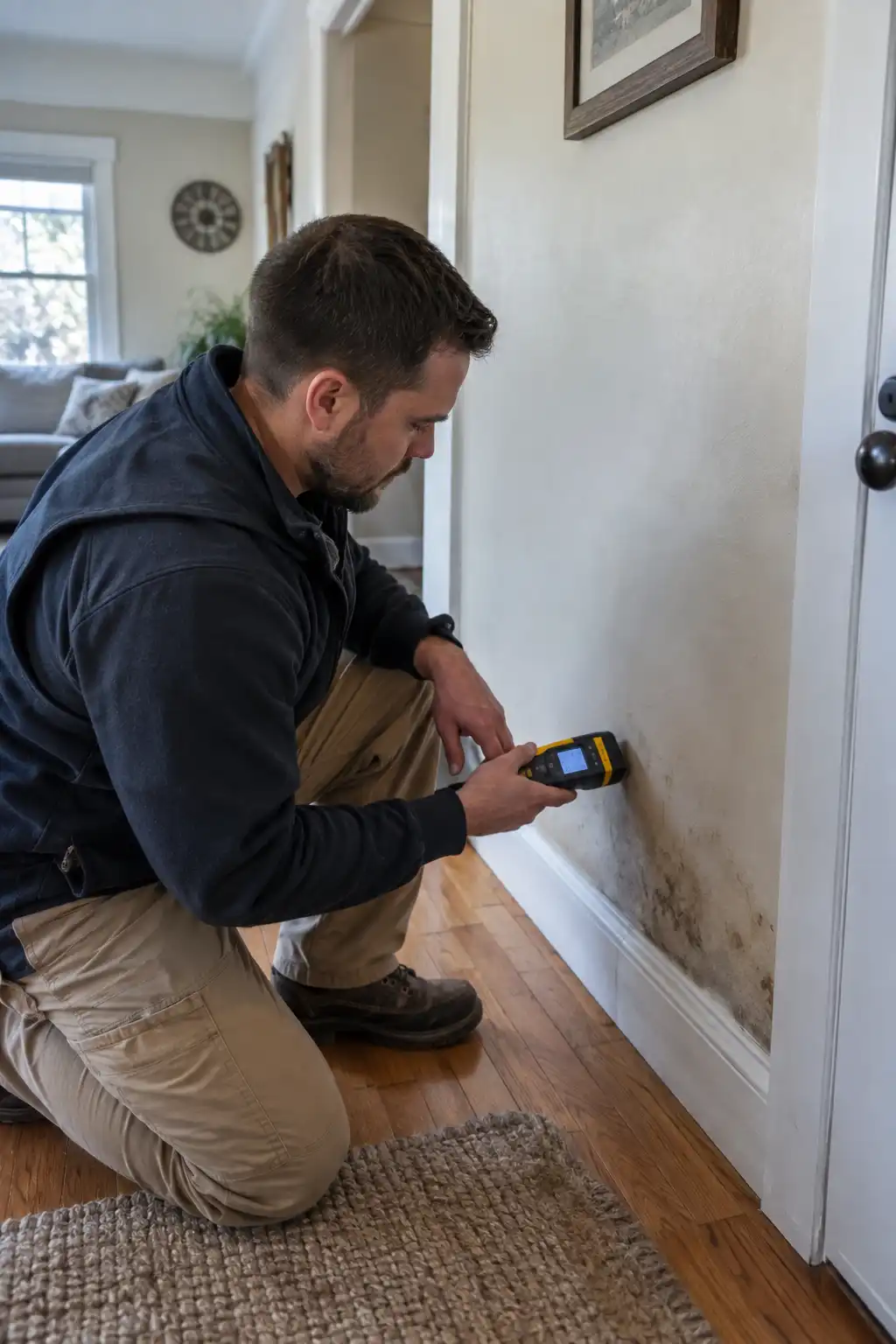
Moisture is an important factor in many mold problems. Depending on the property and conditions, we may use digital moisture meters, hygrometers, and infrared thermal imaging to help identify areas of elevated moisture or conditions that may require closer inspection. We also consider indoor relative humidity, with EPA guidance generally recommending levels below 60% and ideally between 30% and 50%.
3
Determine the Affected Area
Visible mold does not always show the full extent of a moisture-related problem. Where conditions warrant further evaluation, we may use moisture mapping, thermal imaging, visual inspection, or other assessment methods to investigate potentially affected areas, including concealed spaces. Mold sampling may be considered when it serves a specific assessment purpose rather than being treated as an automatic step for every visible mold condition.
4
Establish the Appropriate Scope
The appropriate remediation scope depends on the affected materials, extent of the condition, moisture source, and site circumstances. Where applicable, remediation planning may be informed by the IICRC S520 Standard for Professional Mold Remediation, along with relevant EPA guidance and applicable workplace safety requirements. For projects subject to New York's mold licensing requirements, the applicable assessment and remediation requirements under New York State law must also be considered.
5
Address the Affected Materials
The cleanup approach depends on the material involved and the extent of the mold condition. Depending on the situation, affected surfaces may be cleaned using appropriate HEPA-filtered equipment and cleaning methods, while materials that cannot be effectively cleaned may require removal. The goal is to address the affected materials using methods appropriate to the condition rather than applying the same treatment to every surface.
6
Complete the Necessary Cleanup
Where containment is appropriate, the work area may be isolated using polyethylene sheeting and controlled access. Depending on the project, HEPA air filtration, negative air pressure, dehumidification, and controlled air movement may be used to help manage airborne particles and moisture during the work. Cleanup methods are selected according to the affected area, materials, and conditions identified during the assessment.
7
Reduce the Conditions That Support Recurrence
Once the affected area has been addressed, attention turns to the conditions that allowed the problem to develop. That may include correcting or reducing the source of moisture, improving ventilation where appropriate, and managing indoor humidity. Where applicable, post-remediation verification can be used to evaluate whether the completed work meets the established remediation criteria before the project is closed.
About SporeGuard Remediation
SporeGuard Remediation is a local mold removal and remediation company based in Inwood, NY 11096, serving homeowners, property managers, and businesses in the surrounding communities.
Our work is built around understanding the actual conditions at each property — the affected materials, moisture sources, and scope of the problem — rather than applying a one-size-fits-all treatment.
Every project starts with listening to what you've noticed and evaluating what's really happening at the property before recommending a next step.
What to Expect When You Call SporeGuard Remediation
You do not need to know exactly what type of mold you have before calling.
Tell us what you have noticed, where the problem is located, and whether there has been a leak, flooding, water damage, condensation, or recurring moisture.
The more information you can provide, the easier it is to understand the situation and determine the appropriate next step.
When you call, it helps to know:
Where you see or smell mold
How long the problem has been present
Whether the mold keeps returning
Whether there has been a leak or water damage
Whether the affected area is a basement, bathroom, kitchen, attic, crawl space, or another location
Indoor relative humidity should generally remain below 60%, with 30–50% considered an ideal range where possible.
Wet or damp materials should be dried as quickly as possible. EPA recommends drying wet materials within 24–48 hours when possible.
Water leaks and moisture problems should be corrected instead of simply covering affected surfaces.
Mold can grow on many different materials when sufficient moisture is present.
Porous materials with significant mold contamination can be difficult to clean completely and may require removal.
These principles are important because removing visible mold without addressing the moisture conditions can leave the underlying problem unresolved.
Mold & Indoor Health
Mold and damp indoor conditions can affect people differently.
Some individuals may experience allergic reactions, respiratory irritation, or asthma symptoms, particularly those sensitive to mold.
If you notice visible mold, a persistent musty odor, or ongoing moisture problems, addressing the building conditions can help prevent the problem from continuing.
SporeGuard Remediation focuses on the property itself—identifying affected areas, addressing mold and moisture concerns, and helping determine the appropriate remediation approach.
For health concerns or symptoms, consult a qualified healthcare professional.
New York Mold Remediation Requirements
New York has specific licensing and minimum work requirements for certain mold assessment and remediation activities. Understanding these requirements can help property owners make informed decisions when hiring mold professionals.
Licensing
For work covered by New York's Mold Program, professionals and contractors must hold the appropriate New York State mold license for the type of work they perform. Article 32 also provides specific exemptions in certain circumstances.
Assessment Separation
For covered projects, the same licensee cannot perform both the mold assessment and the remediation on the same property. A licensed mold assessor establishes the assessment and remediation scope before remediation work begins.
Minimum Work Standards
New York's Mold Program establishes minimum work standards for covered mold assessment and remediation activities, including requirements related to worker protection, project notices, and post-remediation assessment.
For projects subject to New York's mold licensing requirements, property owners should verify that the professionals performing the applicable work hold the required New York State licenses.
NYSDOL provides a Licensed Mold Contractors Search Tool that property owners can use to check mold assessor and mold remediation contractor licensing.
Standards & Reference Framework
IICRC S520 Standard for Professional Mold Remediation
U.S. EPA Mold Remediation Guidance
Applicable OSHA Workplace Safety Requirements
ACGIH Bioaerosol Management Guidance
New York State Labor Law, Article 32
Serving Inwood & Nearby Communities
SporeGuard Remediation is located at 115 Narrow Ln, Inwood, NY 11096 and provides mold removal and remediation services throughout Inwood and nearby communities.
Local Coverage
Our primary service area is Inwood, NY 11096, with coverage extending throughout the Five Towns area, parts of Nassau County, and southern Queens. Inwood itself includes a range of property types — waterfront-facing residences near the Bayview and Head of the Bay areas, older residential buildings in the Inwood Houses section, commercial corridors along Burnside Avenue and Doughty Boulevard, and industrial properties in the North Inwood zone.
Nearby communities such as Lawrence, Cedarhurst, Woodmere, Hewlett, Far Rockaway, and Rosedale each have their own mix of single-family homes, co-ops, rental apartments, and commercial spaces. Properties near reference points such as the Inwood LIRR station, Inwood Country Club, and the Nassau Expressway (Route 878) can present distinct moisture and mold concerns depending on age, construction, and exposure.
Our service area includes:
Lawrence
NY 11559
Part of the Five Towns area, Lawrence includes a mix of larger residential properties and waterfront homes. Dedicated mold removal services in Lawrence address moisture and mold concerns in these varied property types.
Cedarhurst
NY 11516
Cedarhurst is a busy commercial and residential hub in the Five Towns. Homeowners and businesses can contact us about mold removal in Cedarhurst when visible growth, musty odors, or recurring moisture become a concern.
Woodmere
NY 11598
Woodmere's residential neighborhoods and commercial areas both deal with seasonal humidity and older construction. Our mold removal services in Woodmere address these conditions in homes, apartments, and businesses.
Hewlett
NY 11557
Hewlett includes a mix of single-family homes and multi-unit properties, with some buildings dating back several decades. For mold removal in Hewlett, we approach each property based on its age, construction, and moisture history.
Far Rockaway
NY 11691
Located in southern Queens, Far Rockaway properties face coastal humidity and, in some areas, prior flood exposure. We provide mold removal services in Far Rockaway for properties dealing with mold and moisture concerns.
Rosedale
NY 11422
Rosedale is a residential neighborhood in southeastern Queens with a mix of older homes and newer construction. Homeowners and businesses can contact us regarding mold removal in Rosedale and related moisture concerns.
Real Mold Removal Results in Inwood
See the difference professional mold remediation makes. These before-and-after examples show typical mold removal projects completed by SporeGuard Remediation in Inwood, NY and surrounding communities.
Common questions about mold removal, moisture control, and what to expect when you contact us.
Does visible mold always require mold testing?
No. Testing is not automatically necessary whenever visible mold is present. The appropriate approach depends on the circumstances, the purpose of the assessment, and what information is needed to determine the next step.
Why does mold keep coming back after cleaning?
Recurring mold can indicate that the moisture condition contributing to the growth has not been corrected. Leaks, condensation, humidity, and other moisture sources should be investigated.
Can mold grow inside walls?
Yes. If moisture enters a wall cavity or another concealed area, conditions can develop that support mold growth. Recurring odors, water damage, staining, or persistent moisture can be reasons for further evaluation.
Is black mold more dangerous than other mold?
Color alone cannot determine the type or health risk of mold. Dark-colored mold should not be identified solely by appearance.
How quickly should water-damaged materials be dried?
EPA recommends drying wet materials within 24–48 hours when possible to help prevent mold growth.
Can mold simply be painted over?
Painting over mold does not solve the underlying problem. The moisture source should be addressed and the affected area properly cleaned before painting or refinishing.
Can a musty smell indicate hidden mold?
A musty odor can have several causes. However, a persistent odor in an area with moisture or previous water damage can be a reason to investigate further.
How long does mold remediation take?
Timelines depend on the size and location of the affected area, the materials involved, and the extent of the moisture problem. Smaller projects may be completed within a few days, while larger remediation may take longer. A clearer timeline is typically provided after the affected area is evaluated.
Do you offer free mold inspections?
Yes. SporeGuard Remediation offers a free on-site inspection and estimate for mold-related concerns in Inwood and nearby communities. This typically includes a visual evaluation, moisture readings, and a discussion of the appropriate next step.
Does homeowners insurance cover mold removal?
Coverage depends on the policy and the cause of the mold. Some policies cover mold resulting from a covered event such as a sudden leak or burst pipe, while long-term moisture issues are often excluded. We recommend reviewing your policy directly with your insurance provider.
Can I stay in my home during mold remediation?
In many cases, yes — depending on the size and location of the affected area and the containment approach used. If the project involves a larger remediation or the affected area is a primary living space, temporary relocation may be recommended. We can discuss this during the inspection.
Are you licensed and insured in New York?
SporeGuard Remediation holds the applicable licensing and insurance for the mold-related work we perform in New York. For covered projects, we coordinate with the appropriate independent assessment required under New York State law. Verification details are available upon request.
Do you provide mold removal for commercial properties?
Tell us where the problem is located, what you are seeing or smelling, how long it has been present, and whether there has been a leak, flooding, or another moisture problem.
Need Help With a Mold Problem?
Visible mold, recurring mold, a persistent musty odor, or recent water damage can all be reasons to have the situation evaluated.
Contact SporeGuard Remediation to discuss the problem and determine the appropriate next step.